Road Rules

Don’t be caught off guard! Familiarize yourself with the most common rules, ordinances and laws about pets that you may encounter when RVing
The other day as I was stopped at a red light, I noticed the adorable Chihuahua in the car next to me. He was hanging half in and half out of the window, as he sat in his owner’s lap while she was driving. Most of us have been guilty of doing this at one time or another—and we all know it’s a bad idea. In fact, driving with a dog on your lap can earn you a ticket in most states nowadays, whether the local ordinance or state law specifically prohibits it or if it falls under the “distracted driver” umbrella.
Because state laws and local ordinances constantly change, make sure to review the rules of the road in the areas you plan to drive through as well as those at your ultimate destination. Not knowing an ordinance or law does not recuse you. Here are eight rules that you may encounter when RVing with your pets.
1. Pet Distraction in Vehicle
Currently, only a handful of states specifically do not allow dogs to sit on your lap while you’re driving or ride unrestrained in a moving vehicle. However, some counties, cities or states can ticket you under a distracted driver ordinance or law if you are stopped and your pet is unrestrained.
Pooches in cars can distract drivers as well as other drivers. Plus, it’s dangerous for dogs. Debris could injure their yes, ears or face; they could fall out of the car; and in a crash, they could be injured or killed by a deployed airbag or from being thrown from the car.
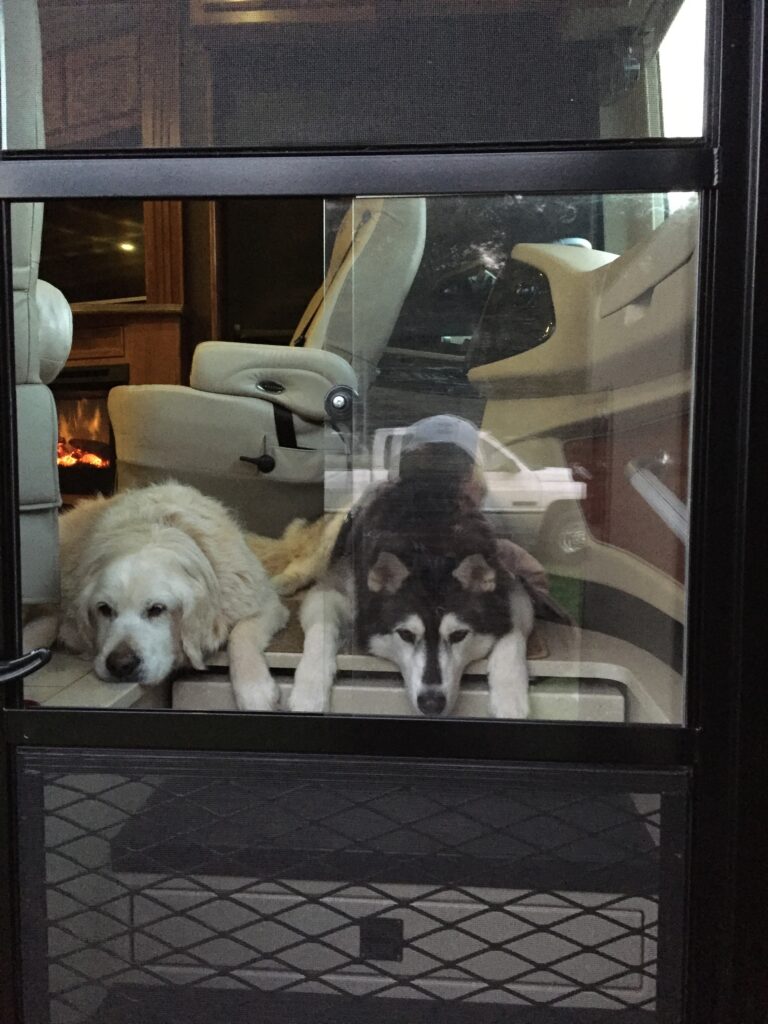
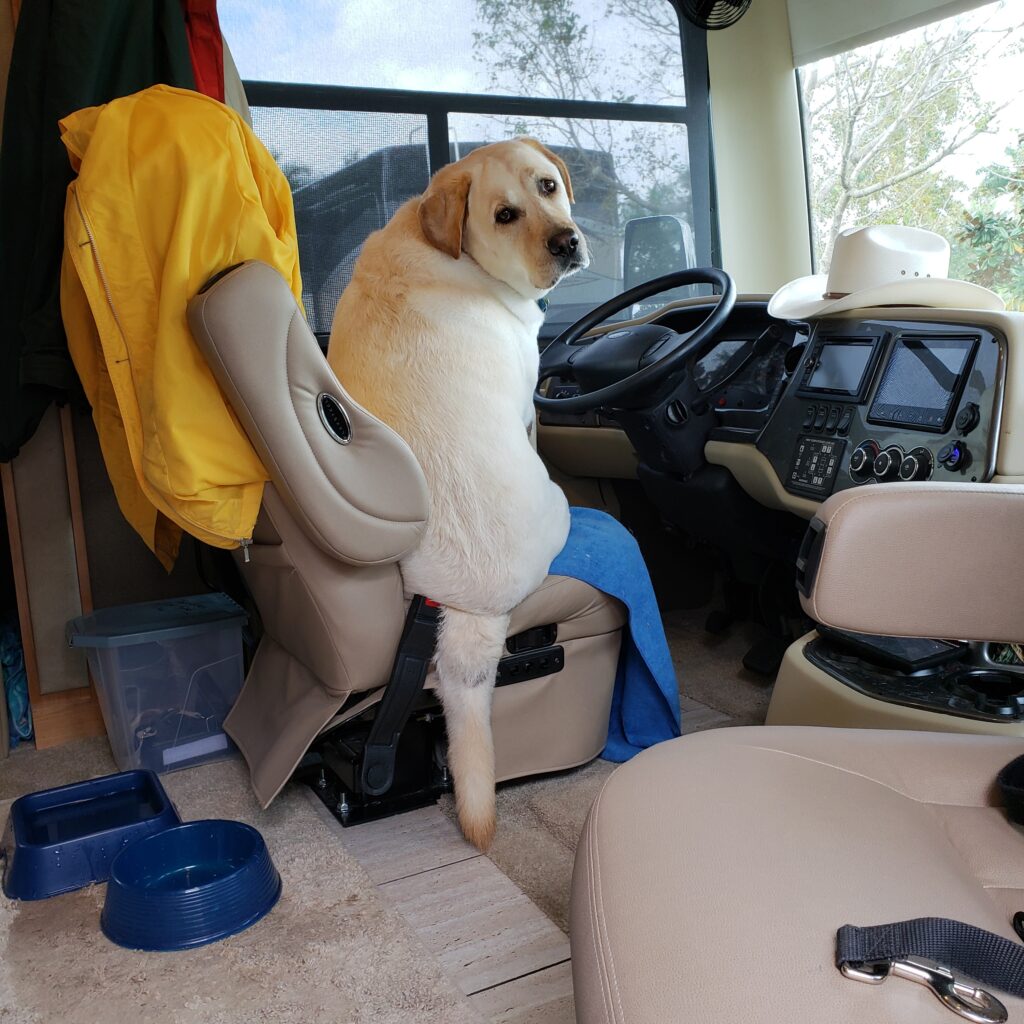
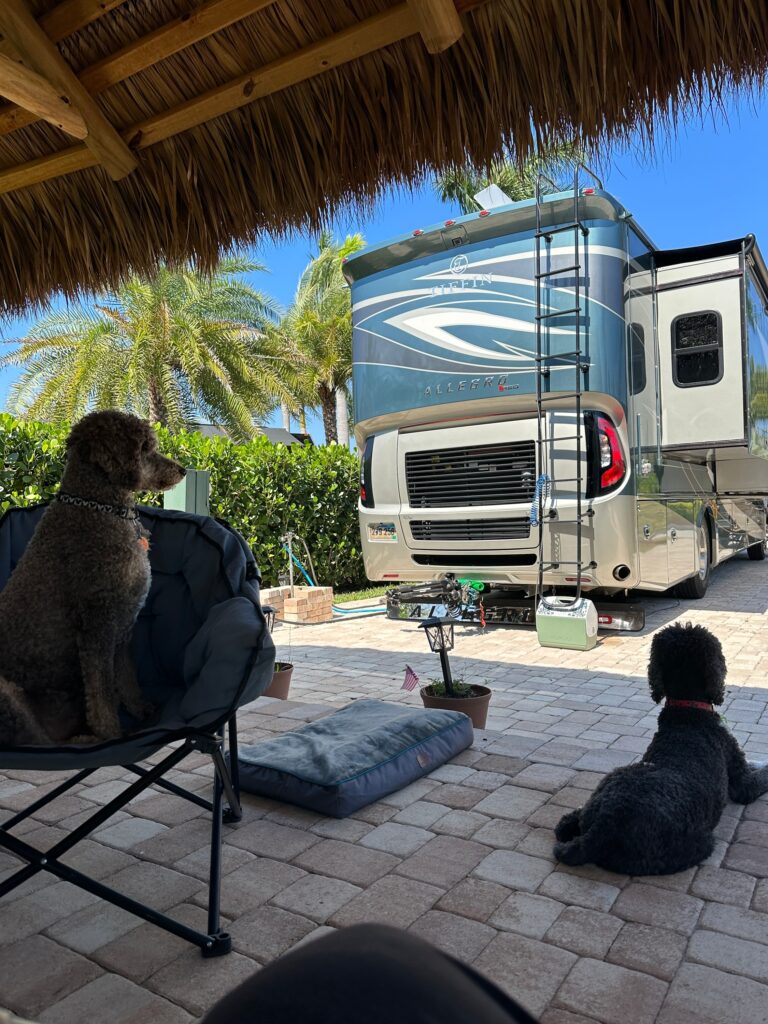
2. No Pets Left Unattended
Some campgrounds have rules about leaving pets unattended in or outside an RV. This means if you leave your RV at the campground, you must take your pets with you. Although an RV is supposed to be our home away from home, this rule was created for the safety of the pets and happiness of the other guests. Pets tend to bark or whine when left alone. Also, power interruptions do occur at campgrounds and no one wants a pet left alone in a hot RV.
3. Leash Laws
You’ll find leash laws everywhere nowadays, which basically state that dogs (or cats) must be restrained on a leash that is 6-feet long or less. You’ll find this law in national and state parks, many counties, cities and towns. Unless an area is specified as a dog-friendly, off-leash area, it’s safe to assume that your dog must be leashed. If a dog-biting incident occurs and your dog is not leashed (restrained), you may find yourself held accountable even if your dog was not the instigator.
As an addendum to leash laws, many places do not allow pets to be tethered to an object and left unattended because this isn’t safe for the pet or other humans. Children, especially, have been known to be bitten in this type of situation. Many national and state parks have no-tethering rules as well.
4. Rabies Vaccination and Health Certificate
Pack your pet’s current health information when you hit the road. Most states require proof of rabies vaccination, which you can get from your vet. If your dog bites someone—and camping is a situation ripe with oblivious strangers walking across your camp site—you must show proof of a current rabies vaccination. Your dog still may be quarantined for about 10 days whether he has been vaccinated or not.
If your pet is exposed to a wild animal with rabies, the public health veterinarian of the state you are traveling in will determine next steps. If your pet has not been vaccinated, the vet may decide on euthanasia and testing, or you may have to pay for up to six months of quarantine at the state’s facility.
If you cross international borders, you’ll need a health certificate and a USDA endorsement of the certificate.You may need one for certain states, too. This certificate typically includes your pet’s medications, vaccinations and current health status.
5. Breed-Specific Legislation
Breed-specific legislation (BSL) restricts ownership or possession of certain breeds of dogs, typically pit bull-type dogs, Rottweilers, Dobermans, German Shepherds, etc. At one point, many counties and cities passed these laws in response to fear of dog-bite attacks. Dogs are individuals, just like people, and evidence does not prove that these bans work. As a result, some states began to pass laws prohibiting legislative discrimination based on a dog’s breed. Check the city, county and state you plan to travel to or through for BSL laws. If your dog breed is not allowed, you could be fined or your pet may be removed.
6. No Pets Allowed
Although RVing ranks at the top of pet-friendly travel, there are still a number of places you can’t bring your pet that may not seem obvious.
- Bathrooms, information centers and some picnic areas at state rest stops: We road warriors love a good rest stop. However, most rest stops only allow pets in specified pet areas.
- Certain trails and scenic must-see spots in national and state parks: This is all about preservation of the habitat and the safety and security of the wildlife and other human visitors. Each park has its own restrictions, which you can find at the National Park Service website or the state park’s website.
- Beaches: Some beaches don’t allow pets or restrict the hours or even months when they can be on the beach
7. Limits on Number on Size of Dogs
One of our favorite RV parks in Asheville, North Carolina, instated a new rule limiting the number of dogs in an RV to two. Because we had stayed there many times, we didn’t check the rules before reserving our spot. We did a quick check a few days before we left and saw the new limit. Since we had two dogs and a foster dog at the time, we were caught completely off guard.
Although RV parks tend to be pet-friendly, they may limit the number of pets you bring into the park. There may also be dog breed or size restrictions, too, especially at privately owned parks. Always read the pet rules and restrictions before reserving a spot. We always call the park whenever we have had a pet-related question.
8. Pick Up After Your Dog
Bring those poop bags along! Every national and state park and campground has a rule about picking up after your dog and disposing of pet waste. You’ll also find this rule under nuisance ordinances in counties, cities and towns. Consequences may be anything from getting fined to being asked to leave the premises.
Although these eight rules are the most common, you may come across more. For example, in my county, under the nuisance animal ordinance, a pet may not be allowed to “bark, whine, howl, crow or cackle, in an excessive, continuous or untimely fashion” and bug the neighbors. Although my dogs and parrots don’t seem to care when I tell them to quit breaking the law, they quiet down for treats—thank goodness. That’s why we never leave home without them.
Melissa L. Kauffman is the former editor of Dogster and Catster magazines. For the past decade, Melissa and her husband have traveled around the country in their RV along with their dogs and parrots
Road Rules Resources
Need more info? Check out these websites before your next trip.
- Table of State Rabies Vaccination Laws for Companion Animals: www.animallaw.info/topic/table-rabies-vaccination-laws
- Taking a Pet to One U.S. State or Territory to Another: www.aphis.usda.gov/aphis/pet-travel/interstate-pet-travel
- Taking a Pet to a Foreign Country: www.aphis.usda.gov/aphis/pet-travel/take-pet-to-foreign-country
- What Is Breed-Specific Legislation: www.aspca.org/improving-laws-animals/public-policy/what-breed-specific-legislation
- Anti-Breed Specific Legislation by State: resources.bestfriends.org/article/anti-breed-specific-legislation-state
- National Parks Take Rover on Your Road Trip Too: www.nps. gov/subjects/pets/index.htm

Where to Take Your Tiffin: A Guide to Choosing the Perfect Luxury RV Resort

Beyond the Gate: How to Choose the Right RV Resort Community for Your Tiffin Lifestyle

Cooking with Your Convection Microwave Oven
With Thanksgiving right around the corner, cooking with your convection microwave oven can seem daunting at first. But never fear! Follow our helpful tips, and you'll be an RV cooking master in no time.
