Diamond Shield: Protection with a Purpose
Article by Steve Blume, Tiffin Ambassador
It was the same morning, the same Myrtle Beach rally, the same room, and the same cup of coffee. After unexpectedly learning more than I ever thought possible about RV tires, I decided to stay put for the next seminar — Diamond Shield.
I’ll admit, I almost skipped it. After all, how much could there be to say about a clear protective layer on the front of my Tiffin? Within minutes, I realized this wasn’t just a film — it was a solution. It was about a problem Tiffin once considered almost unsolvable. How did this idea come about? What was it like before Diamond Shield? There was no better person to ask than Bob Tiffin, who was hanging out and greeting owners in a new Tiffin Allegro Bus outside.
“Motorhomes used to be all white, but then we started adding some colored stripes.” Bob smiled as he reminisced. “They looked great on the lots, but not so good after our customer drove their brand-new coach across the country and returned with rock chips all over the front cap. Then we were stuck trying to fix it.
“Touch-ups were costly and inconsistent. We were paying paint shops everywhere, trying to make things right, and we couldn’t keep doing that. We tried everything we could think of. For a while, we even tried a protective tape product that was used on cars. It helped some, but it didn’t last long — and boy was it ugly,” he laughed. “We were desperate.”
“Then, in 2008, we found Diamond Shield. It was a fairly expensive special-order option, but in the 2009 models, it made such a difference that we included it as standard equipment on all Tiffin Class A motorhomes. Once we found Diamond Shield, those problems were gone.”
What Diamond Shield Actually Is

One point that often gets misunderstood is terminology. Diamond Shield is not the name of the film applied to the front of a coach — it is the name of the company and the service they provide.
Diamond Shield designs, engineers, and manufactures paint protection systems specifically for the RV industry. Their product is a thermoplastic urethane paint protection film (PPF), similar to automotive-grade PPF but engineered for the unique demands of large motorhomes.
“We’re not just taking an automotive product and scaling it up,” said Jason Seeler, General Manager of Diamond Shield. “RVs see longer exposure to UV, larger surface areas, extended storage periods, and thousands of miles of bug impact and road debris. Our systems are designed specifically for that environment.” That durability is one reason Tiffin still relies on Diamond Shield. “The Peak product used on Tiffin coaches carries a material and installation warranty for seven years for the original owner,” Seeler said. Today, Diamond Shield remains standard on all Tiffin Class A motorhomes and is also used on Super C coaches and select vans.
Care, Maintenance, and Owner Responsibility
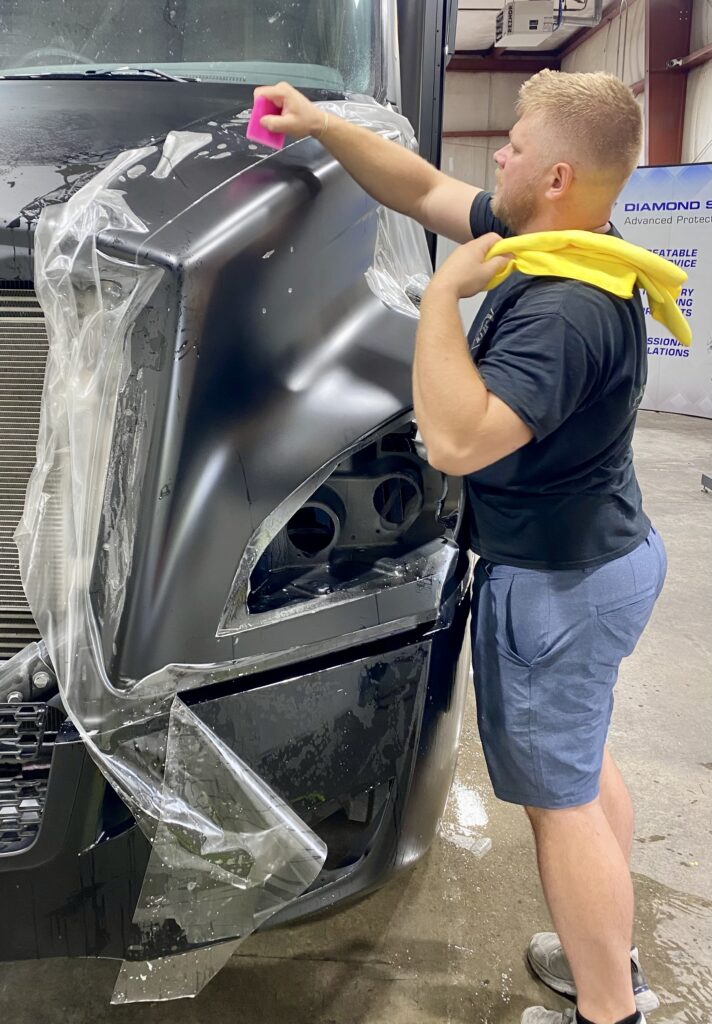
Another common misconception is that Diamond Shield requires complicated maintenance. According to Seeler, that’s not the case.
“We want to educate owners on simple care and maintenance to ensure a long, useful life,” he said. “Wash it regularly using the same products you’d use on your car, and don’t let bugs and road grime sit on the surface.”
That was the message echoed during the Diamond Shield seminar I attended at the Myrtle Beach rally, where National Account Manager Brad Myers reviewed basic do’s and don’ts — what products are safe, what to avoid, and how routine care can dramatically extend service life. If an object penetrates the shield, wash it first, then ensure the area is dry. Use clear nail polish to seal, but don’t overdo it.
Long life comes down to a few simple habits.
Diamond Shield’s 3-Step Easy Care Plan
Wipe Regularly
Wipe bugs, road grime, and dust from your paint protection film using a wet, soft cloth or microfiber. A 50/50 mixture of vinegar and warm water works great. Avoid bug and tar removers or soaps containing harsh chemicals such as Bugs N All, Magic Eraser, Rain X or dryer sheets. After wiping, a protectant can be applied to help maintain the surface.
Wash Often Use any automotive approved soap and a soft wash mitt to give the film a deeper clean.
Wax Quarterly
Applying wax on a quarterly basis adds an extra layer of protection. Use a liquid cream or spray wax recommended for use on paint protection film, such as 303 Aerospace Protectant or Wash Wax All.
What Happens When It’s Neglected
For the most candid perspective, you don’t talk to a manufacturer — you talk to the person who sees the consequences firsthand. Brock Keeton has been removing and replacing Diamond Shield systems in the Red Bay area since its introduction. He’s seen everything from well-maintained coaches to extreme neglect.
“The biggest cause of failure I see is lack of maintenance,” Keeton said. “You’ve got to use a wax with UV protection and keep those acidic bugs off the surface. I see a lot of older, second-owner coaches where the original owner did nothing. With proper care, owners can reasonably expect a service life of 10 to 12 years. Without it, failures can appear in as little as five or six years.”
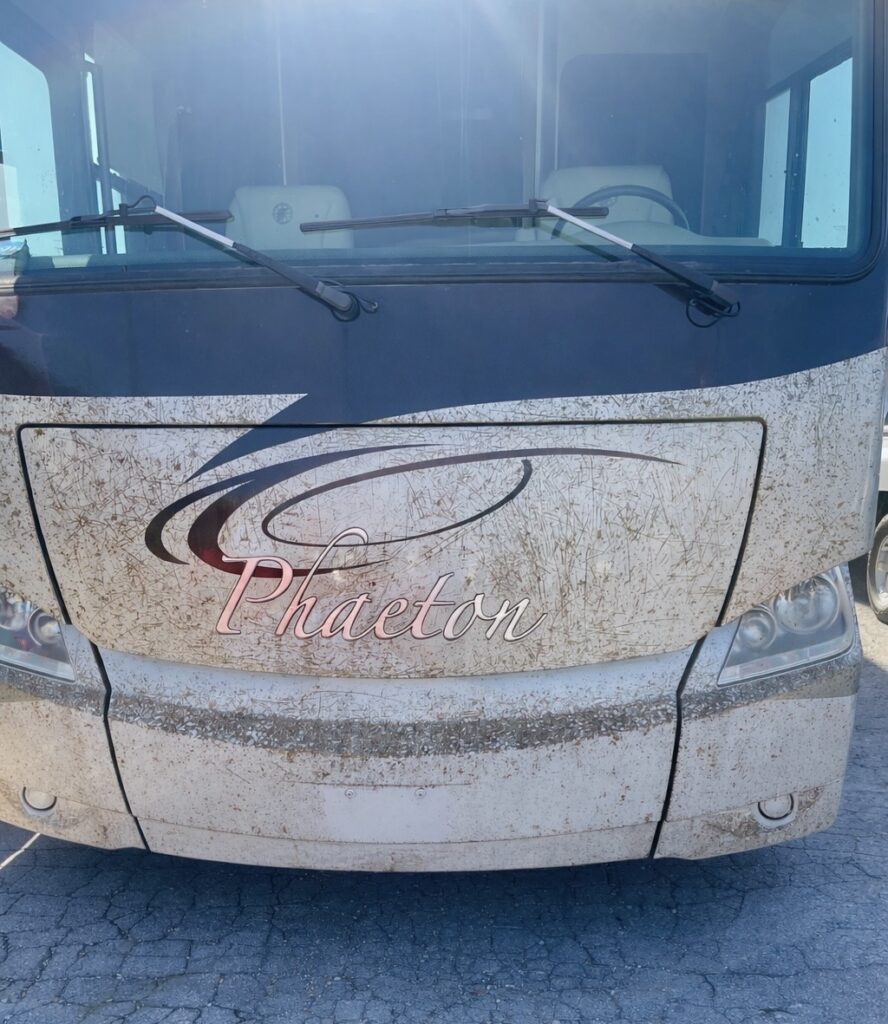
One recent job stood out. “I took the Diamond Shield off a 2012 Phaeton that had been sitting in a field for about five years due to the owner’s health issues,” he said. “It was one of the worst cases I’ve seen. But once the material was removed, the paint underneath looked brand new — like it had just come off the line.”
Removing a neglected system isn’t trivial. Keeton estimates six to eight hours for removal and about five hours to install a new system, depending on the coach. I mentioned to Bob Tiffin that some online posts were from owners who had the film removed and were not planning to replace it. He smiled, looked down, and shook his head in disbelief. That told me everything.
The Value You Don’t See — Until It’s Gone
That story illustrates the quiet value of Diamond Shield. When it’s doing its job, you barely notice it. But when it’s removed — sometimes after a decade or more — the condition of the paint underneath tells the real story. Diamond Shield was never designed to be indestructible or maintenance-free. It was designed to be a sacrificial layer, absorbing road abuse so the paint beneath it doesn’t have to. For owners who understand that role and take a few simple steps to care for it, the payoff is long-term protection, a preserved appearance, and fewer unpleasant surprises down the road.
That morning in Myrtle Beach, I almost skipped the seminar. After all, it was just a clear layer on the front of the coach — something I’d taken for granted for years. An hour later, I walked out with a new appreciation for what it actually does. It isn’t just a film. It’s protection, pride of ownership, and smart engineering quietly doing its job. With this new knowledge, I even set a calendar reminder of when to wax it. It’s not a big effort, but some things deserve a little more attention than we might give them.
Learn more about Diamond Shield at www.diamond-shield.com!
About the Author:
Steve first lives it, then colorfully writes about it, especially his passion for the RV lifestyle. A retired entrepreneur, he and his wife spend half the year traveling the country in their Tiffin Allegro RED 38 KA and the other half at home in Brentwood, TN with family. Married for almost 50 years, once you meet them he and Nancy are easily remembered – he is 6’4″ and she is 4’7″. His articles on business, personal development, faith, fundraising and running have appeared in numerous newspapers and magazines over the years.

KEEPING IT CHILL – WHY A PORTABLE FRIDGE IS THE ULTIMATE BASEMENT ADDITION
BRUSHY MOUNTAIN PRISON – THE END OF THE LINE

Tiffin Connect: The Future of RV Internet
